How to Tie a Sliding Knot for Necklaces & Bracelets
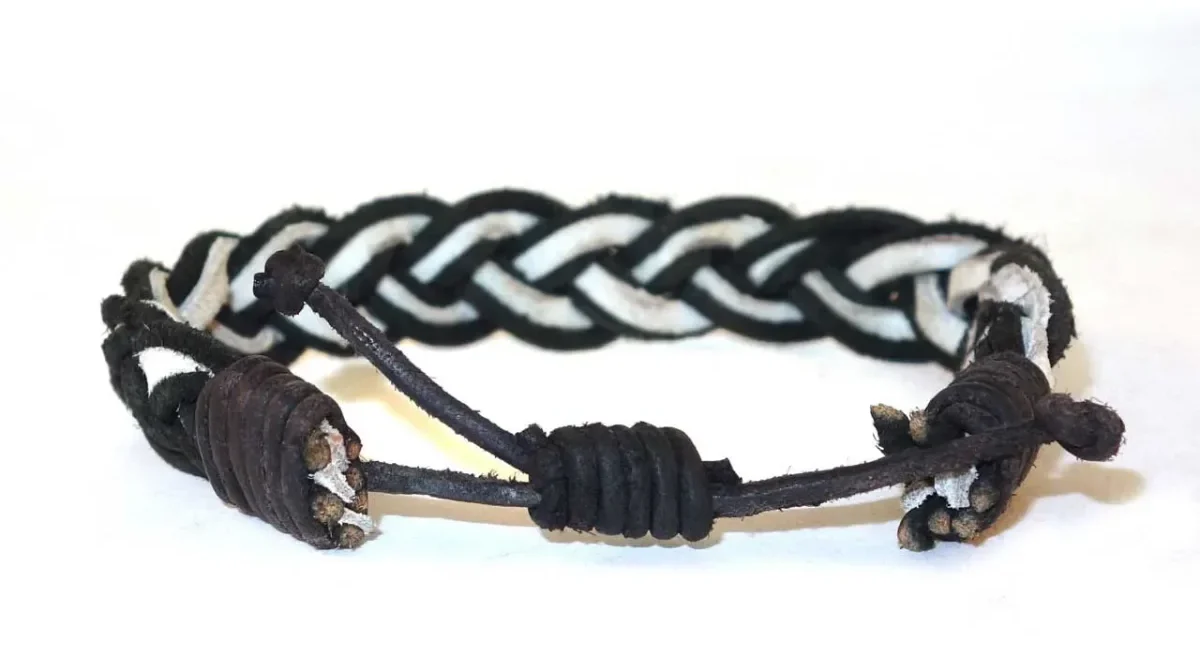
Once you know how to tie a sliding knot, any length of cord becomes a necklace or bracelet that fits anyone, with no clasp. Slide the knots together to slip it on, and apart to tighten it.
We make round leather cord in Kanpur, India, and sliding knots close many of the wristbands we sell. This guide shows the knot step by step, how much cord to cut, and how to fix a knot that slips or sticks.
Quick answer: how to tie a sliding knot
- Overlap the two cord ends so they point in opposite directions.
- Fold one end back on itself, 4 in (10 cm) from the tip, so the other cord sits inside the fold.
- Wrap the tip around the bundle 3 times, working toward the fold.
- Push the tip through the loop at the fold, then pull the long side of the same cord until the wraps close.
- Do the same with the other end, check that both knots slide, and trim.
You need: 1.5 mm round leather cord, about 34 in (86 cm) for a necklace or around 17 in (43 cm) for a bracelet, and sharp scissors. It takes a few minutes.
In this guide
What is a sliding knot?
A sliding knot is a small coil of cord tied around another cord. It grips tightly enough to stay where you leave it, but moves when you push it. That’s why jewelry makers use it instead of a clasp: one necklace or bracelet can be worn long or short. You’ll also hear it called an adjustable knot or a barrel knot.
It isn’t a slip knot. A slip knot is a single loop that closes when you pull its end, the knot you start crochet with. A sliding knot rides along a second cord.
What you need
- Round leather cord, 1.5 mm. It’s the easiest size to learn on. There’s more on choosing a cord below.
- Sharp scissors, so you cut the leather cleanly instead of crushing it.
- A tape measure.
- Jewelry glue for the ends, if you want it.
Tip: for practice, tie a short piece of tan cord around a black one. You’ll see exactly where each wrap goes, which is why the diagrams below use one of each.
How much cord do you need?
Cut the size the loop has to open to, plus 4 in (10 cm) for each sliding knot. Add 2 in (5 cm) more if you tie a pendant on with a lark’s head knot.
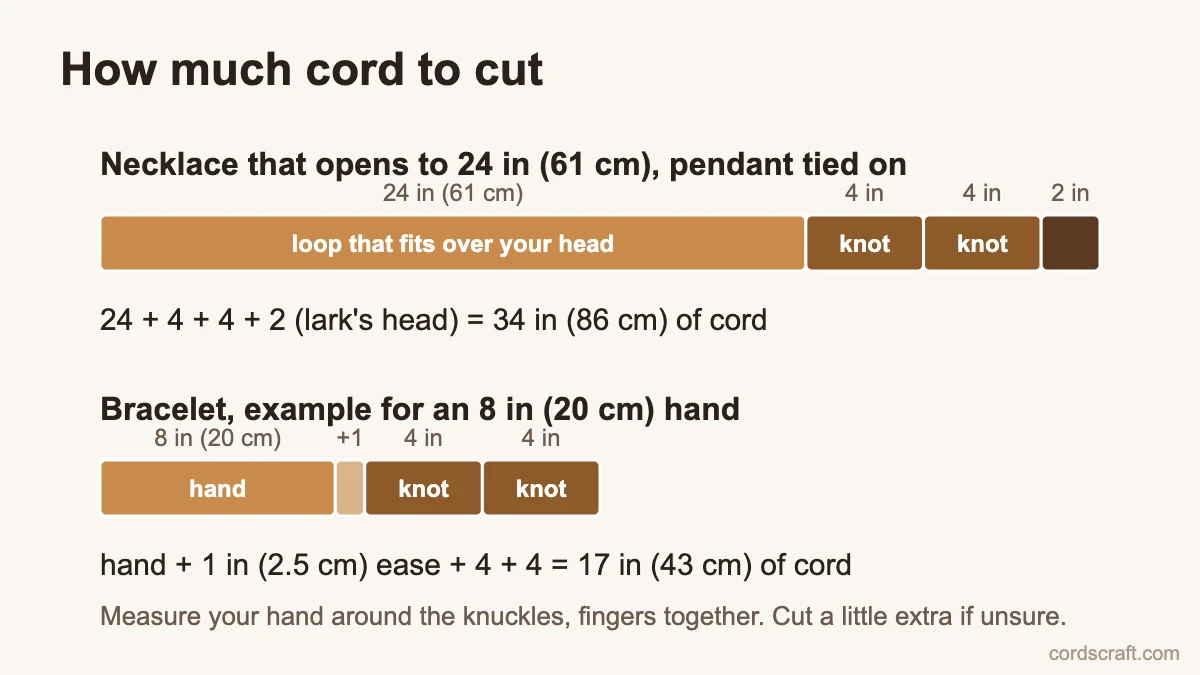
- Necklace: it has to open to about 24 in (61 cm) to go over an adult head. With two knots and a tied-on pendant, that’s 34 in (86 cm) of cord.
- Bracelet: it has to open wide enough to pass over your hand. Measure around your knuckles with your fingers together, add 1 in (2.5 cm), then add 8 in (20 cm) for the two knots.
| Longest necklace length | Cord, pendant tied on | Cord, pendant on a bail |
|---|---|---|
| 24 in (61 cm) | 34 in (86 cm) | 32 in (81 cm) |
| 30 in (76 cm) | 40 in (102 cm) | 38 in (97 cm) |
| 36 in (91 cm) | 46 in (117 cm) | 44 in (112 cm) |
Slid apart, two sliding knots close the loop to roughly half its biggest size, so one piece covers a wide range of fits. Not sure how much to cut? Cut a little extra. You can trim a tail, but you can’t add cord back.
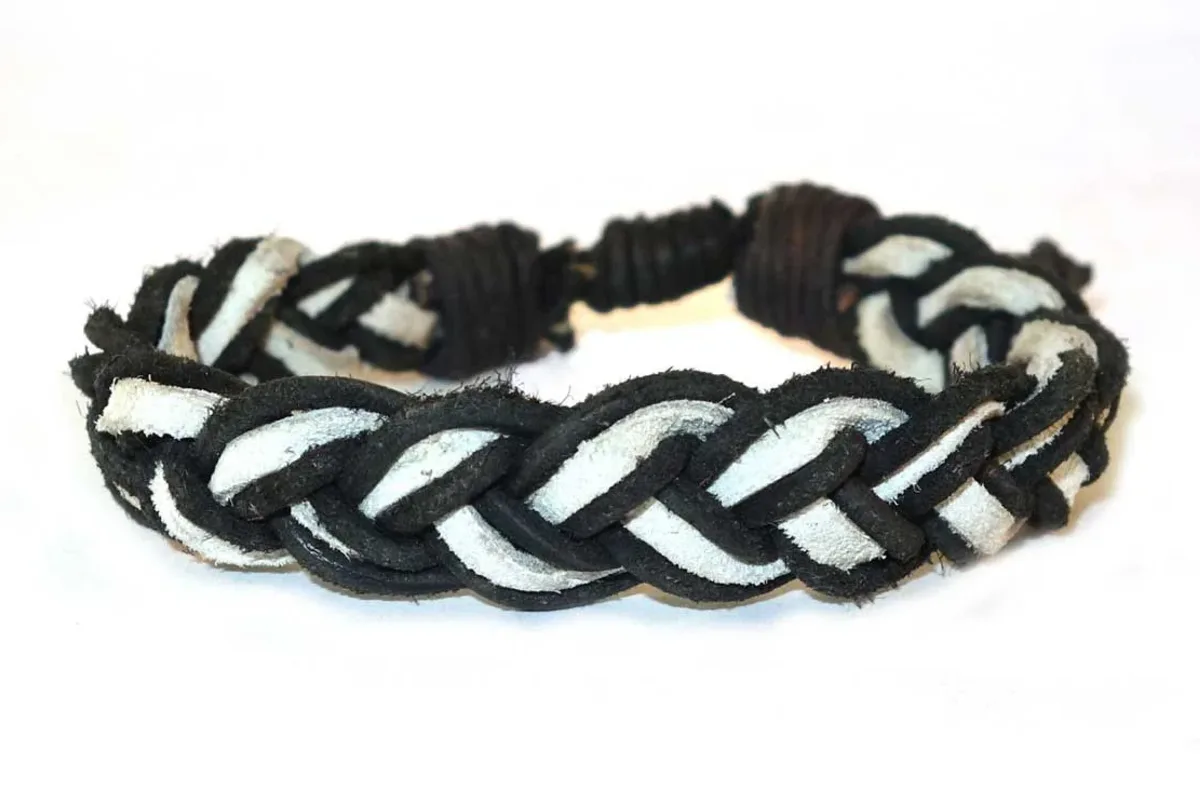
How to tie a sliding knot bracelet
This is the double sliding knot: each end of the cord is tied around the other, so the bracelet adjusts from both sides.
Step 1: Overlap the ends
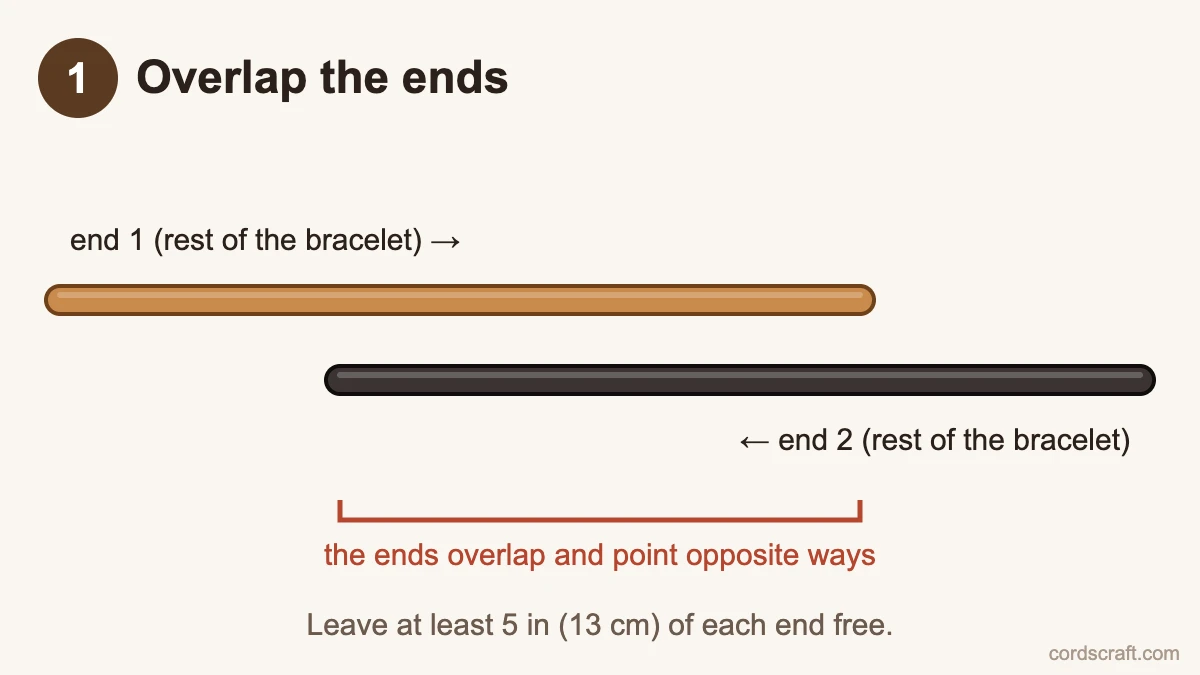
Cut your cord and thread on any beads now. Lay it in a circle and let the two ends run past each other in opposite directions, with at least 5 in (13 cm) of each end free.
Step 2: Fold the first end
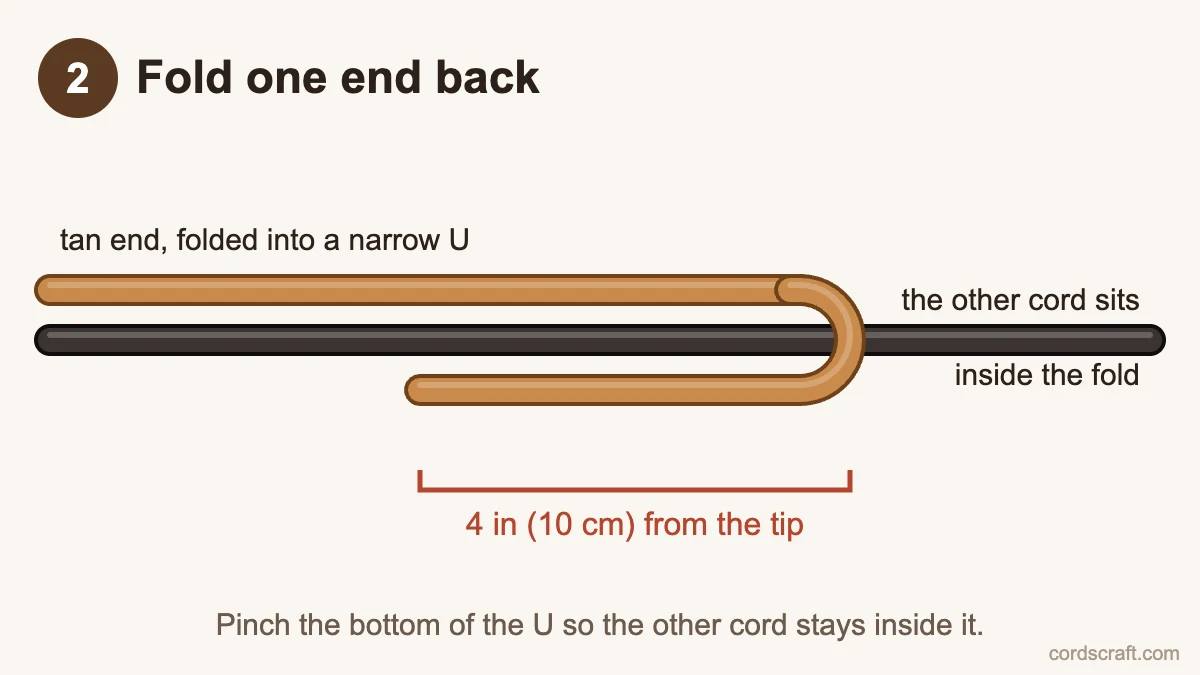
Fold one end back 4 in (10 cm) from its tip to make a narrow U. Lay the U over the other cord so that cord sits inside it, and pinch the bottom of the U.
Step 3: Wrap three times
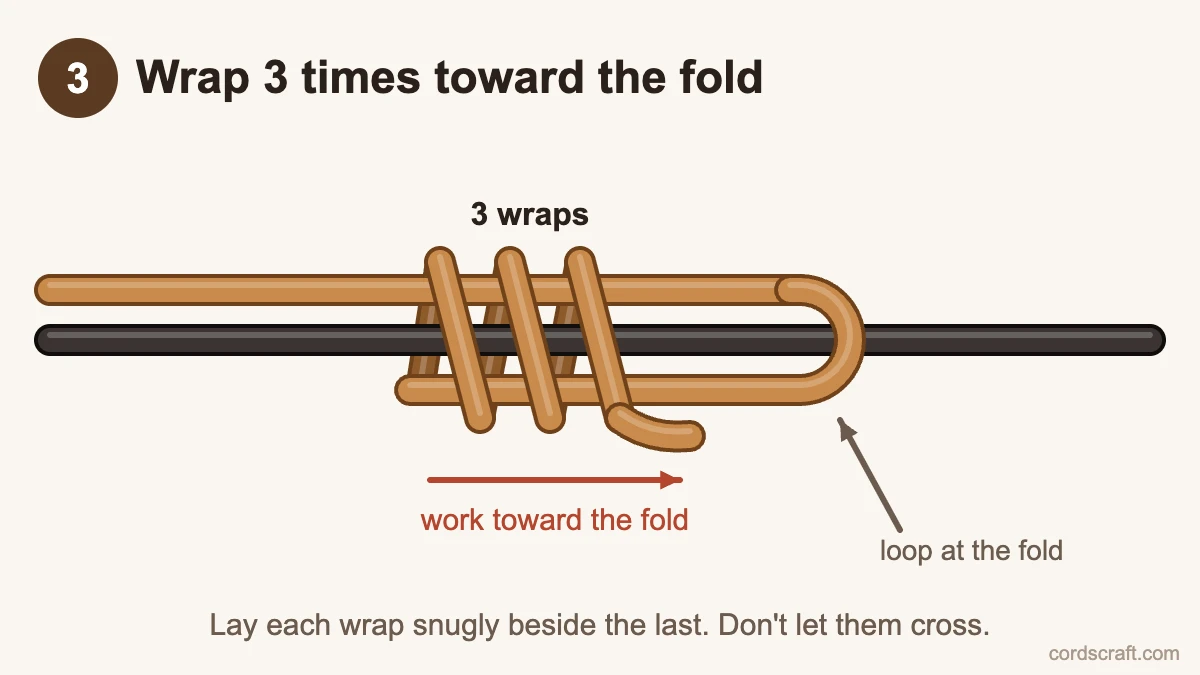
Wrap the tip around everything in your fingers, both sides of the U and the cord inside it, three times. Work toward the fold and lay each wrap snugly beside the last, without crossing.
How many wraps? Three suits 1.5 mm and 2 mm leather. Add a fourth on thin or slippery cord. More wraps grip harder; fewer slide more easily.
Step 4: Go through the loop and pull
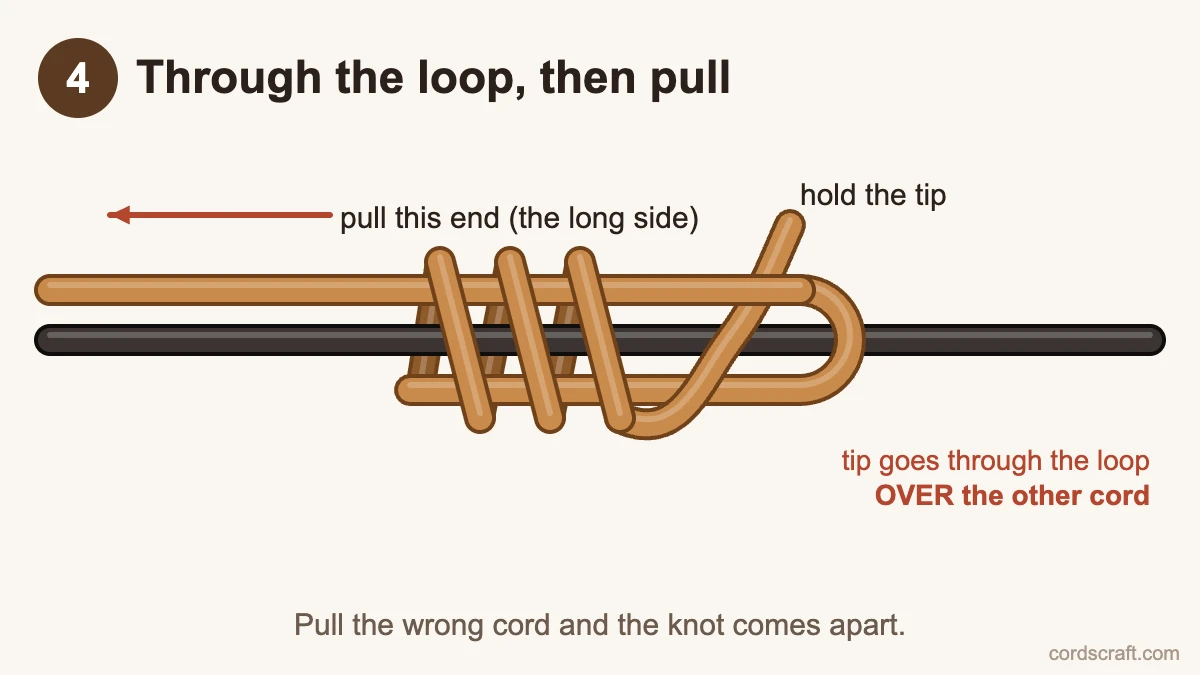
Push the tip through the small loop at the fold, passing over the cord inside the U, not under it. Then hold the tip and gently pull the long side of the same cord. The wraps close into a neat coil.
Pull the wrong cord and the knot comes apart, so check before you pull hard.
Step 5: Check that it slides
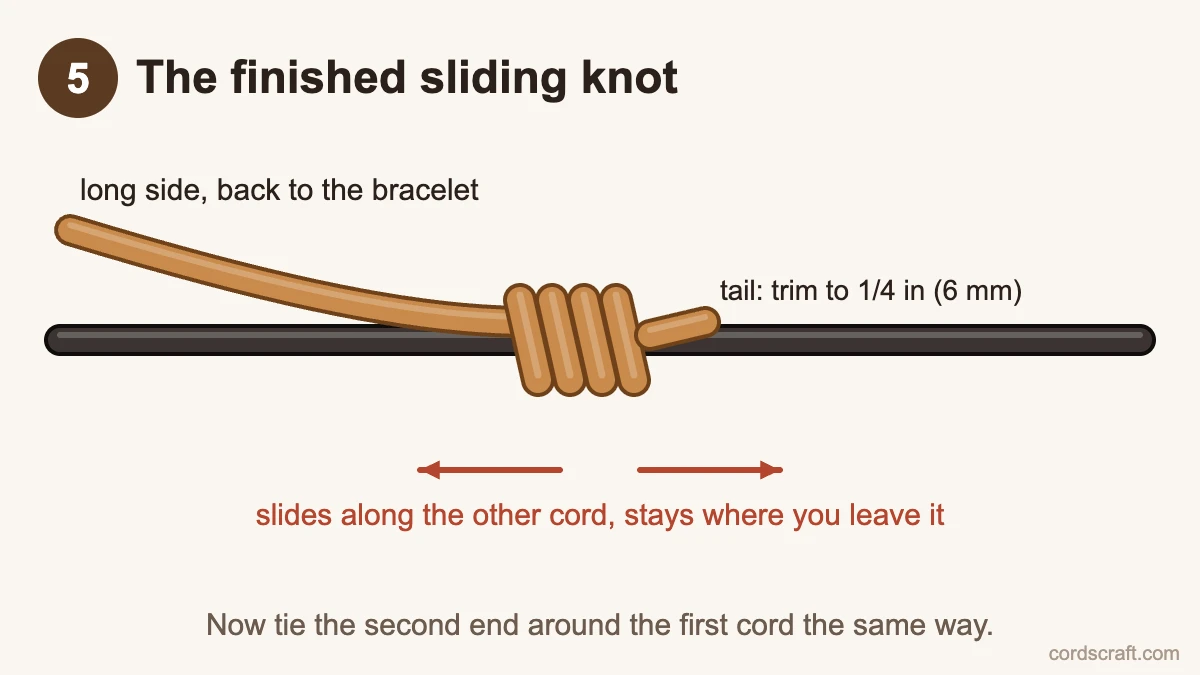
Push the knot along the other cord. It should move with a firm push and stay put when you let go.
Step 6: Tie the second knot and trim
Turn the bracelet around and repeat steps 2 to 5 with the other end. Slide both knots together, slip the bracelet over your hand, then slide them apart to tighten. Trim each tail to about 1/4 in (6 mm).
How to tie a sliding knot necklace
A sliding knot necklace uses exactly the same knot on a longer loop. Only three things change:
- Cut more cord. 34 in (86 cm) opens to 24 in (61 cm), enough to go over your head. Use 32 in (81 cm) if the pendant has a bail.
- Add the pendant first. Thread a bail onto the middle of the cord. For a ring or loop, tie a lark’s head: fold the cord in half, push the fold through the ring, then pass both ends through the fold and pull snug.
- Tie the knots at the back. Lay the necklace flat with the pendant at the bottom, cross the ends, and tie both knots as in steps 2 to 5 above.
To wear it, slide the knots together, put it on over your head, then slide them apart until the pendant sits where you want it. For a heavy pendant, use 2 mm cord and add a fourth wrap to each knot.
How to tighten or loosen a sliding knot bracelet
Slide the knots away from each other to tighten. Slide them toward each other to loosen. Knots together means the bracelet is at its biggest; knots apart, its smallest.
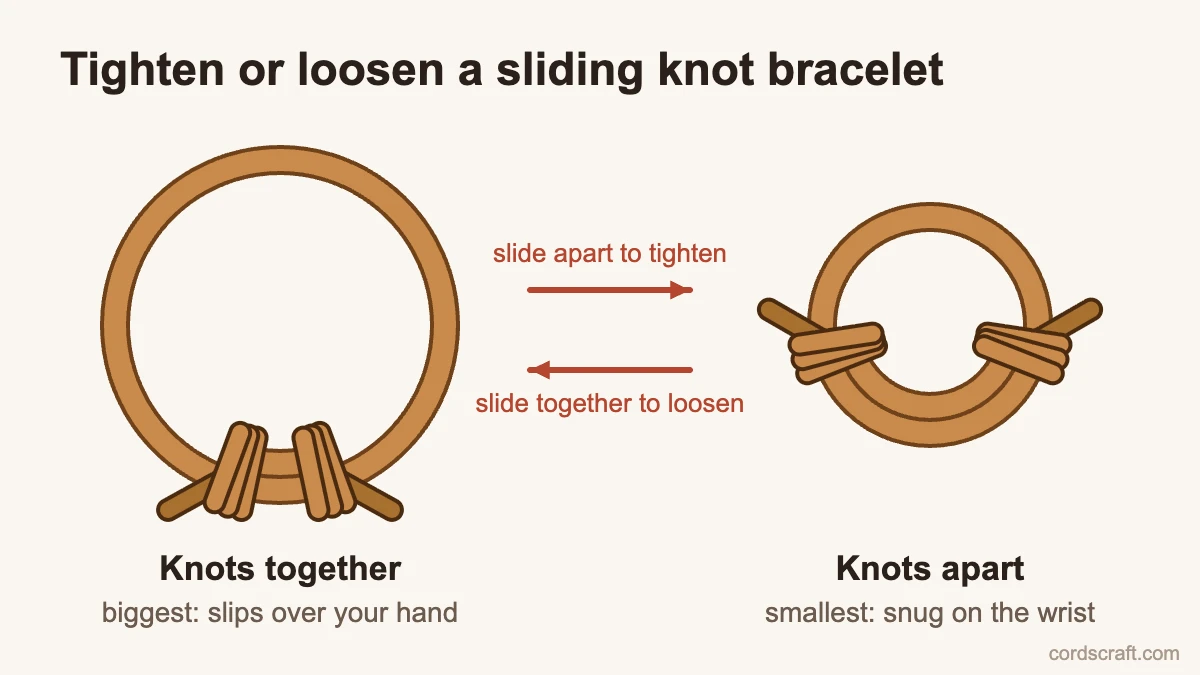
On your own wrist: rest your arm on a table, hold one knot still with your thumb and pull the other tail. A necklace works the same way.
Other closures: single knot and square knot slider
Two knots suit most leather pieces. For a tidier look, or for beads and thin cord, these closures use a separate short piece of cord instead.
Single sliding knot
One coil holds both ends, so it looks neater and hides at the back of a necklace.
- Lay the two ends side by side, pointing opposite ways, overlapping by about 2 in (5 cm).
- Cut 8 to 10 in (20 to 25 cm) of 1 mm cord, fold it into a narrow U and lay it along the overlap.
- Wrap one end around both cords and the U four or five times, working toward the bend. Keep the wraps a little loose.
- Push that end through the loop at the bend, then pull the other end until the wraps just close. Any tighter and the cords won’t slide.
- Trim and glue the short cord’s ends, keeping glue off the bracelet cords, and tie an overhand knot near each bracelet tip.
Square knot slider
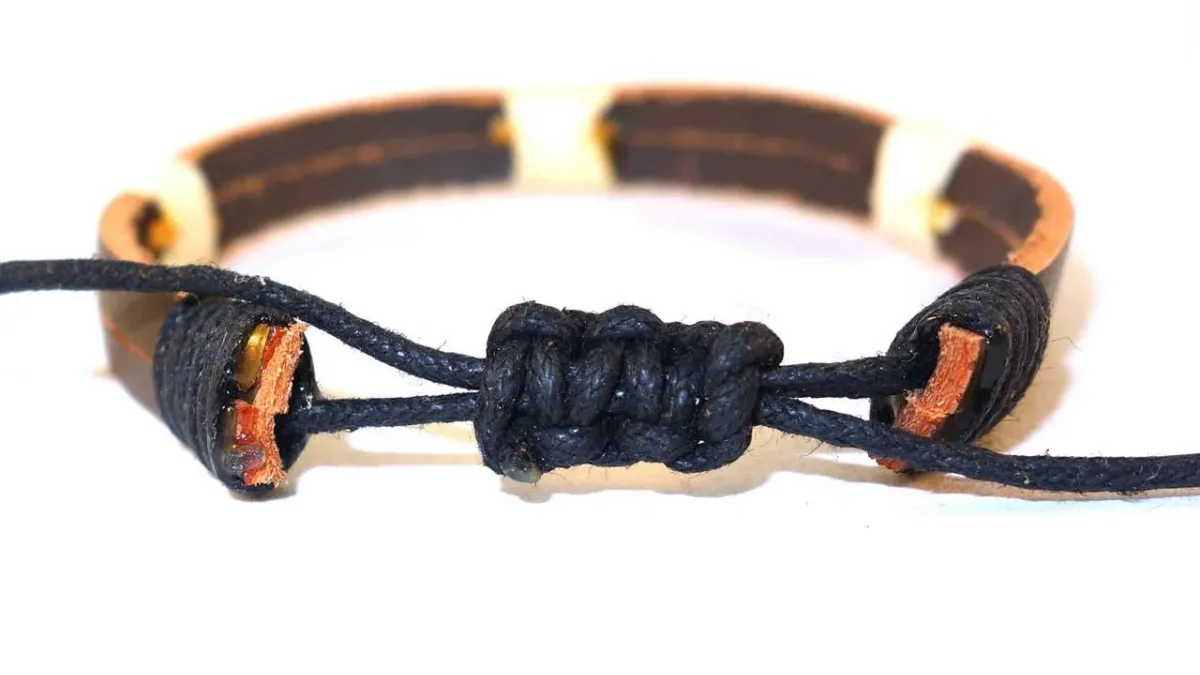
This is a short, flat band of macrame square knots tied around both ends, the closure on most friendship and beaded bracelets. Tape the overlapped ends down, slide the middle of about 16 in (40 cm) of 1 mm cord under them, and tie 4 to 6 square knots, switching sides each time. If the band twists into a spiral, you’ve tied the same side twice in a row.
The best cord for a sliding knot
Use 1.5 mm or 2 mm round leather for most sliding knots. Round cord wraps evenly. Flat cord twists as you wrap it, so the coils won’t sit side by side.
| Cord | The knot | Best for |
|---|---|---|
| 1 mm round leather | Small and neat, but can creep, so add a wrap | Fine necklaces, and single knots or square knot sliders |
| 1.5 mm round leather | Neat, easy to tighten, slides smoothly | First knots, most bracelets and necklaces. Our pick. |
| 2 mm round leather | Firm, with more grip | Men’s bracelets, heavier pendants |
| 3 mm round leather | Bulky; wraps are hard to keep even | Statement pieces, closed with a single knot or square knot slider |
How to finish the ends
- Trim each tail to about 1/4 in (6 mm). Much shorter and it can work out of the knot.
- Add a stopper: an overhand knot or a large-hole bead near each tip.
- Glue sparingly: a tiny dot on the cut end only. Glue on the cord the knot slides along sets it solid.
Don’t burn leather cord. A lighter seals nylon, but leather just scorches and goes hard.
Sliding knot problems and how to fix them
| Problem | Why it happens | Fix |
|---|---|---|
| The knot slips and the bracelet keeps getting bigger | Too few wraps, or loose ones | Re-tie with one more wrap, and snug each wrap before you pull the long cord. |
| The knot won’t slide | Wraps too tight, the other cord caught in the loop, or glue on the cord | Ease the wraps open with a needle. If the other cord is inside the loop, re-tie and pass the tip over it. |
| The knot falls apart as you tighten it | You pulled the tip, or the other cord | Re-tie. Hold the tip and pull the long side of the same cord. |
| The tail pulls out of the knot | It was trimmed too short | Leave about 1/4 in (6 mm), or add a stopper knot or bead. |
| The knots get stiff after a few weeks | Moisture, and every slide tightens the wraps a little | Let the piece dry at room temperature, then work the wraps loose. Next time, tie them a touch looser. |
Sliding knot FAQs
Do sliding knots come undone?
Not if they’re tied well. The wraps grip the cord they ride on, and the tip is trapped inside the coil. If a knot starts to loosen, add a wrap or re-tie it a little firmer, and don’t trim the tails shorter than 1/4 in (6 mm).
How do you lock a sliding knot so it doesn’t move?
Set the length you want, then put a small dot of jewelry glue where the knot meets the cord it slides on and let it dry completely. The piece won’t adjust after that, so only lock it when you’re sure of the fit.
Can a leather sliding knot bracelet get wet?
A splash is fine, but take it off to swim or shower. Soaked leather stiffens as it dries, and the knots can tighten until they won’t slide. If it gets wet, pat it dry and let it air-dry flat, away from direct heat.
For more on keeping leather looking good, see our leather care guide.
Leather cord for sliding knots
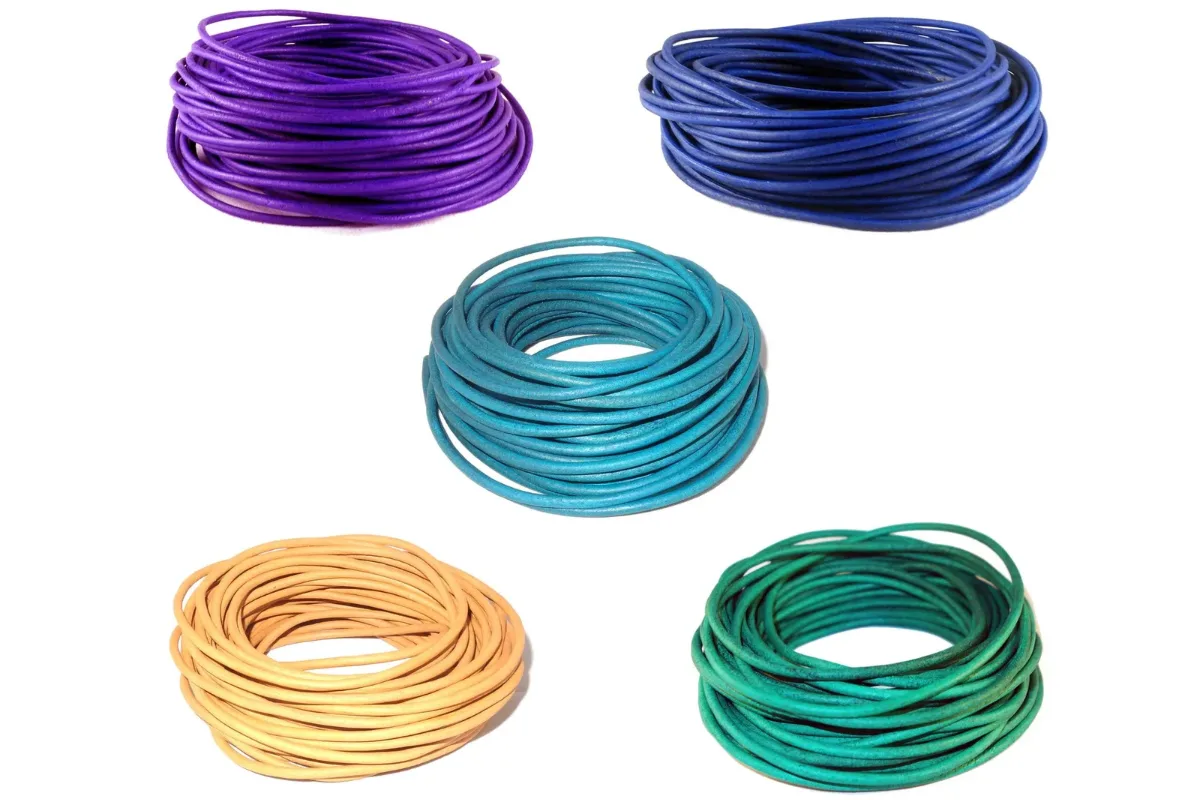
To start, pick 1.5 mm round leather in a light and a dark color:
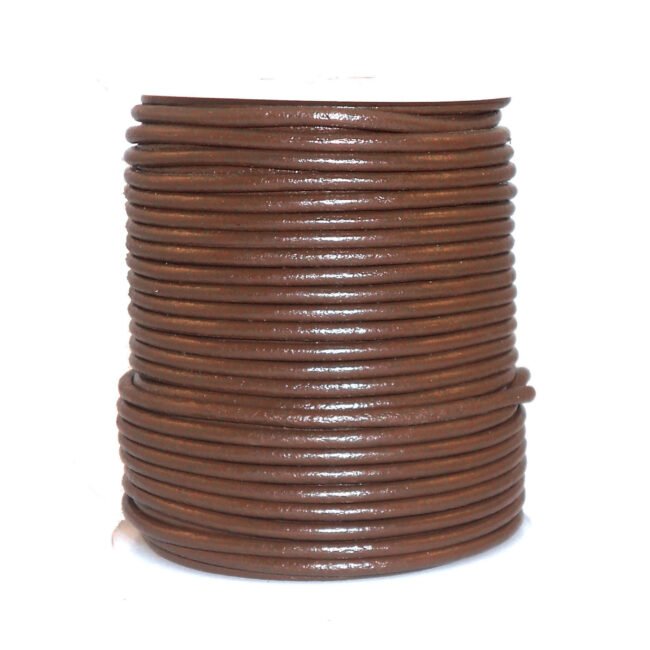 Light tan brown round leather cord
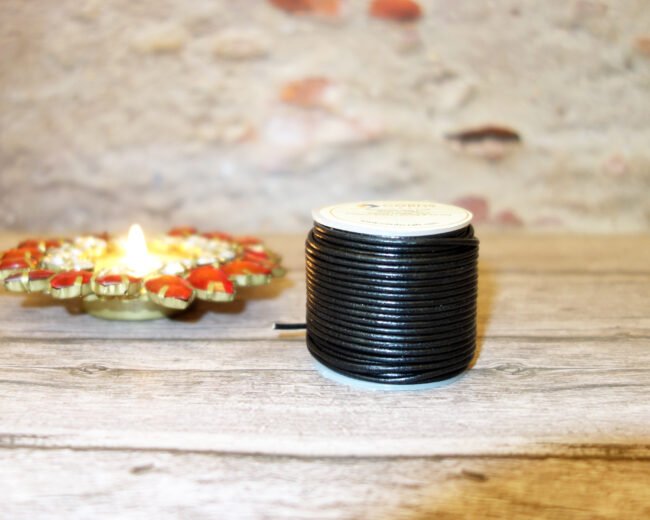 Black round leather cord
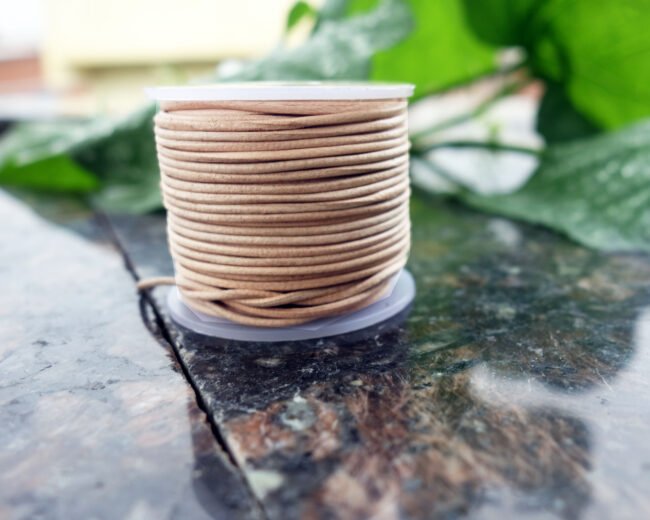 Natural round leather cord
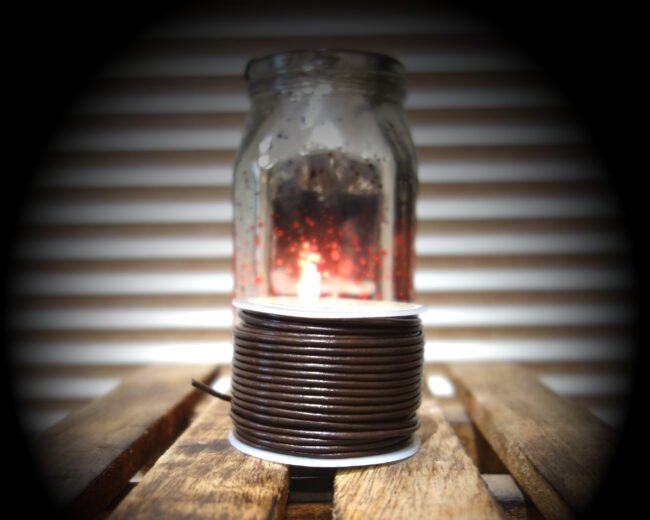 Dark brown round leather cord
Every size and color is in our round leather cord collection. Rather buy one ready-made? These leather wristbands close with sliding knots:
 Braided suede wristband with sliding knots
 Multi-string wristband with a sliding closure
 Brown leather band with a sliding closure
Making jewelry to sell? We supply leather cord in bulk to makers and shops. Send us a bulk enquiry with the sizes and colors you need.
More from our workshop: braided leather cord ideas for jewelry making and the best cords for jewelry making.